Solar Energy Impact on WAPDA Bills: How Solar Users Affect National Grid 2025
Comprehensive analysis of how Pakistan's solar boom impacts WAPDA electricity bills, grid stability, and national energy policy. Understand the effects of mass solar adoption on remaining grid users and future implications.
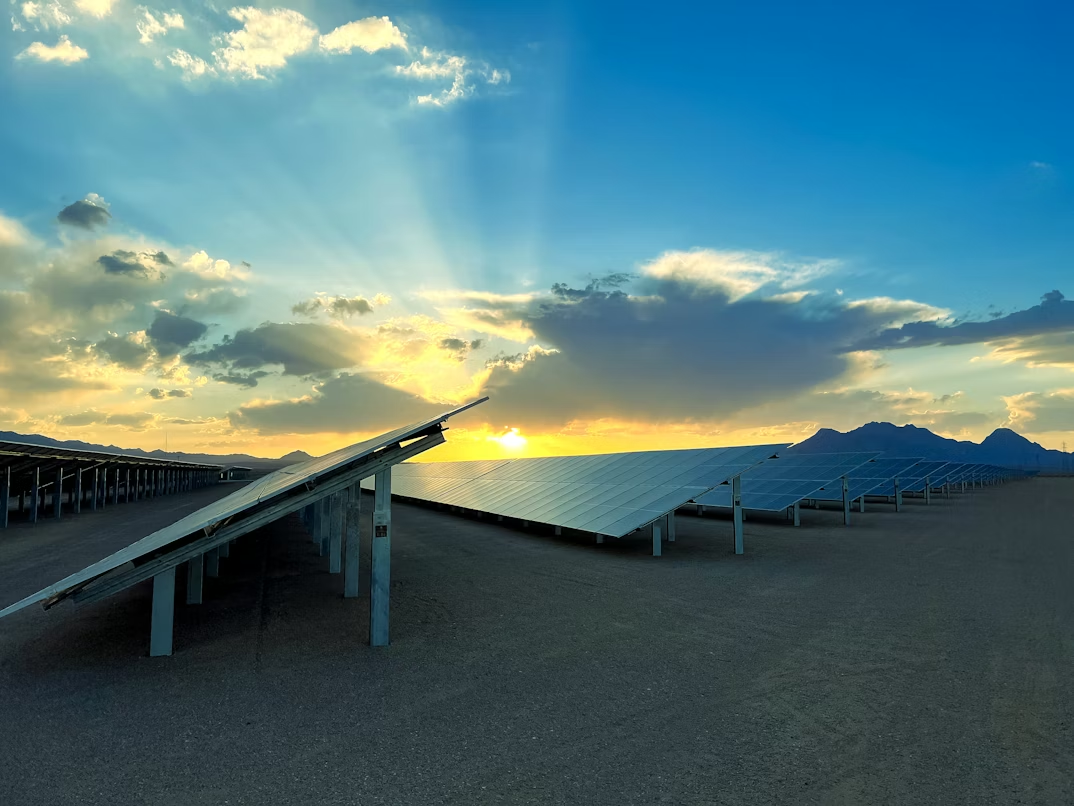
Pakistan's solar revolution is transforming the electricity landscape in unprecedented ways. The rapid adoption of solar energy was initially encouraged by the government in power-starved Pakistan, but officials now fear it is spreading too quickly. With an estimated 15 gigawatts of solar installed in 2024 alone, this massive shift is creating complex implications for WAPDA bills, grid stability, and the national energy economy that every Pakistani needs to understand.
Pakistan's Solar Revolution: Numbers and Scale
Solar experts say there's never been a faster adoption of solar, with panels popping up on rooftops. The scale of Pakistan's solar transformation is remarkable, driven entirely by private sector investment rather than government programs.
Current Solar Installation Statistics
| Metric | 2024 Data | 2025 Projection | Impact Scale |
|---|---|---|---|
| Solar Installations | 15 GW installed | 20+ GW expected | Massive transformation |
| Grid Peak Demand | 30 GW national peak | 32 GW projected | Solar = 50% of peak demand |
| Battery Storage | 1.25 GWh installed | 2+ GWh expected | Enhanced grid independence |
| Investment Value | $8+ billion private | $12+ billion projected | Largest energy investment |
Geographic Distribution
- Urban Centers: Lahore, Karachi, Islamabad leading adoption
- Industrial Areas: Faisalabad, Sialkot, Gujranwala heavy installations
- Rural Areas: Agricultural solar pumping widespread
- Commercial Zones: Shopping malls, factories, offices going solar
Impact on WAPDA Electricity Bills
The solar boom is creating a complex dynamic where solar users significantly reduce their grid consumption, but this affects how costs are distributed among remaining grid users.
The Cost Distribution Challenge
Pakistan's National Electric Power Regulatory Authority (NEPRA) reports that capacity payments to power plants exceeded PKR2 trillion (Pakistani rupee) or $7 billion in 2024. These costs must be recovered through higher tariffs on fewer ratepayers regardless of actual usage.
Fixed Costs Spread Over Fewer Users
- Power Plant Capacity Charges: PKR 2 trillion annually must be recovered
- Transmission Infrastructure: Grid maintenance costs continue regardless of usage
- Distribution Networks: Local grid upkeep expenses remain constant
- Administrative Costs: WAPDA operational expenses persist
Bill Impact Analysis for Different User Categories
Solar Users (Net Metering)
- Monthly Bills: Reduced by 70-90% on average
- Fixed Charges: Still pay connection and service charges
- Export Income: Earn PKR 12-16 per unit sold to grid
- Net Effect: Often zero or negative monthly bills
Non-Solar Grid Users
- Tariff Increases: Bear higher per-unit costs
- Cross-Subsidization: Support infrastructure costs for all users
- Peak Hour Charges: Higher rates during solar low-generation periods
- Capacity Charges: Share fixed power plant costs among fewer users
Industrial and Commercial Users
- Demand Charges: Peak demand-based pricing impacts
- Solar Adoption Response: Accelerated commercial solar installations
- Grid Dependency: Reduced but still significant for backup power
Grid Stability and Technical Challenges
The recent surge in solar photovoltaic (PV) installations in Pakistan has exacerbated grid issues such as increasing peak demand, peak shifting and transformer burnouts, resulting in financial and technical implications for the grid.
Peak Demand Shifting
Traditional vs Solar-Era Demand Patterns
| Time Period | Traditional Peak | Solar Era Reality | Grid Implications |
|---|---|---|---|
| Morning (6-10 AM) | Medium demand | Reduced grid demand | Lower conventional plant usage |
| Midday (10 AM-4 PM) | High demand | Very low grid demand | Grid export, reverse power flow |
| Evening (4-10 PM) | Peak demand | Extreme peak demand | Grid stress, rapid ramping needed |
| Night (10 PM-6 AM) | Low demand | Moderate demand | Base load plants run normally |
Technical Grid Challenges
Infrastructure Stress Points
- Transformer Burnouts: Reverse power flow causing equipment failures
- Voltage Instability: Rapid solar generation changes affecting grid voltage
- Frequency Regulation: Grid frequency harder to maintain with intermittent solar
- Load Dispatching: Conventional plants struggling with rapid changes
Distribution Network Issues
- Bidirectional Power Flow: Networks designed for one-way power flow
- Protection System Coordination: Safety systems not optimized for solar
- Voltage Rise: Local voltage increases during peak solar generation
- Power Quality: Harmonic distortion from multiple inverters
Economic Implications for National Energy Sector
With the rapid shift of demand from the grid to rooftop renewables, the national grid is at risk of a downward debt spiral. This creates significant economic challenges for Pakistan's energy sector.
The Death Spiral Phenomenon
How Solar Adoption Creates Financial Pressure
- Reduced Revenue: Fewer units sold but fixed costs unchanged
- Higher Tariffs: Remaining users face increased per-unit costs
- Accelerated Solar Adoption: Higher bills drive more users to solar
- Further Revenue Decline: Cycle continues, worsening grid finances
Impact on Power Generation Companies
Thermal Power Plants
- Capacity Factor Reduction: Plants run fewer hours but must recover fixed costs
- Ramping Requirements: More frequent start-stop cycles increase wear
- Economic Dispatch Changes: Merit order disrupted by solar generation
- Stranded Assets Risk: Some plants may become economically unviable
Independent Power Producers (IPPs)
- Capacity Payments: Must be paid regardless of actual generation
- Contract Renegotiation Pressure: Government seeking to reduce IPP costs
- Fuel Cost Impact: Reduced fuel costs but fixed capacity charges remain
- Return on Investment: Lower utilization affecting profitability
Policy Responses and Regulatory Changes
In June 2025, the Pakistani government imposed a 10% tax on imported solar panels, nearly all of which came from China. This reflects growing concerns about the pace of solar adoption and its grid impacts.
Net Metering Policy Evolution
Proposed Changes to Net Metering
- Export Rate Reductions: Lower payments for solar electricity exported to grid
- Time-of-Use Pricing: Different export rates based on time of day
- Connection Charges: Higher fees for new net metering connections
- System Size Limits: Caps on residential solar system sizes
Grid Modernization Initiatives
- Smart Grid Development: Two-way communication and control systems
- Storage Integration: Grid-scale battery storage for stability
- Demand Response Programs: Smart load management systems
- Grid Code Updates: New technical standards for solar integration
Regional Variations in Solar Impact
Different regions of Pakistan experience varying degrees of solar adoption impact on local grid operations and electricity bills.
Punjab - Highest Solar Penetration
Grid Impact Characteristics
- Peak Solar Cities: Lahore, Faisalabad leading in installations
- Industrial Solar: Manufacturing sector heavy solar adoption
- Grid Stress Points: LESCO and FESCO networks most affected
- Bill Impact: Highest disparity between solar and non-solar users
Sindh - Urban vs Rural Divide
Karachi Metropolitan Impact
- K-Electric Network: Separate grid dynamics from national system
- Commercial Solar Boom: Shopping malls and businesses going solar
- Load Shedding Reduction: Solar reducing peak load stress
- Net Metering Revenue: Significant income for solar users
KPK and Balochistan - Emerging Solar Markets
Rural Solar Development
- Off-Grid Solutions: Solar providing access to remote areas
- Agricultural Applications: Solar water pumping widespread
- Grid Extension Alternative: Solar cheaper than grid extension
- Limited Grid Impact: Lower overall penetration levels
Consumer Perspectives: Winners and Losers
The solar revolution creates different outcomes for different categories of electricity consumers in Pakistan.
Solar Adopters - The Winners
Typical Solar User Benefits
- Monthly Savings: 70-90% reduction in electricity bills
- Energy Independence: Reduced dependence on grid reliability
- Net Metering Income: Additional revenue from excess generation
- Property Value: Increased home and business valuations
- Environmental Impact: Reduced carbon footprint
Case Study: Lahore Family Solar Installation
- Pre-Solar Bill: PKR 25,000 monthly average
- Post-Solar Bill: PKR 3,000 monthly (87% reduction)
- Net Metering Income: PKR 4,500 monthly
- Net Monthly Benefit: PKR 26,500
- Annual Savings: PKR 318,000
Non-Solar Users - Bearing the Burden
Increased Cost Burden
- Higher Tariffs: Increased per-unit electricity costs
- Fixed Cost Allocation: Larger share of infrastructure costs
- Peak Hour Penalties: Higher rates during solar-low periods
- Subsidy Reduction: Lower government electricity subsidies
Vulnerable Consumer Categories
- Low-Income Households: Cannot afford solar installations
- Renters: Unable to install solar systems
- Apartment Dwellers: Limited roof space for solar
- Small Businesses: Insufficient capital for solar investment
Future Scenarios and Projections
Understanding potential future scenarios helps predict how solar adoption will continue affecting Pakistan's electricity sector.
Scenario 1: Continued Exponential Growth
25 GW Solar by 2026 Implications
- Grid Dependency: 80% reduction in daytime grid demand
- Tariff Increases: 50-100% higher rates for remaining grid users
- Infrastructure Stress: Major grid stability challenges
- Policy Intervention: Mandatory solar adoption limits
Scenario 2: Moderated Growth with Regulation
15-20 GW Sustainable Solar Integration
- Managed Transition: Gradual grid modernization
- Balanced Cost Sharing: Fair distribution of infrastructure costs
- Grid Stability: Maintained through smart grid technologies
- Energy Security: Enhanced through distributed generation
Scenario 3: Grid Modernization Success
Smart Grid Enabling Massive Solar
- Bidirectional Grid: Optimized for solar integration
- Storage Integration: Grid-scale batteries providing stability
- Dynamic Pricing: Real-time tariffs reflecting supply-demand
- Peer-to-Peer Trading: Solar users selling directly to neighbors
International Comparisons and Lessons
Other countries have faced similar solar integration challenges, providing valuable lessons for Pakistan.
Germany's Energiewende Experience
- High Solar Penetration: Similar grid stability challenges faced
- Policy Solutions: Feed-in tariff adjustments and grid investments
- Cost Management: Renewable energy surcharge system
- Grid Modernization: Massive smart grid infrastructure investment
California's Duck Curve Solution
- Peak Shifting Challenge: Similar to Pakistan's experience
- Battery Storage Deployment: Grid-scale storage addressing instability
- Time-of-Use Rates: Encouraging consumption during solar hours
- Demand Response: Smart appliances managing load automatically
Recommendations for Stakeholders
Different stakeholders need targeted strategies to navigate Pakistan's solar transition successfully.
For Government and Regulators
Policy Recommendations
- Grid Investment: Accelerate smart grid and storage deployment
- Tariff Reform: Implement time-of-use and demand-based pricing
- Solar Integration Standards: Mandatory grid-support functions for solar
- Cross-Subsidy Reform: Fair cost allocation mechanisms
For WAPDA and Distribution Companies
Operational Adaptations
- Grid Flexibility: Invest in ramping and storage capabilities
- Demand Forecasting: Incorporate solar generation predictions
- Revenue Model Evolution: Shift from energy sales to grid services
- Customer Engagement: Educate consumers about grid integration
For Solar Users
Responsible Solar Adoption
- System Sizing: Right-size systems to avoid excessive export
- Battery Integration: Reduce grid dependency during peak hours
- Load Management: Shift consumption to solar generation hours
- Grid Support: Install inverters with grid-support functions
For Non-Solar Consumers
Adaptation Strategies
- Energy Efficiency: Reduce consumption to minimize bill impact
- Load Shifting: Use appliances during low-tariff hours
- Solar Consideration: Evaluate solar options for future savings
- Community Solar: Explore shared solar installation options
Conclusion: Navigating Pakistan's Solar Transformation
Pakistan's solar revolution represents both the greatest opportunity and most significant challenge in the country's energy history. Renewables adoption is often driven by government programmes or utility tenders, but Pakistan's energy transition is almost entirely private sector-led. This unique characteristic has created unprecedented rapid adoption but also complex implications for grid stability and cost distribution.
The impact on WAPDA bills reflects a fundamental shift in how electricity costs are shared across society. While solar users enjoy dramatic bill reductions, the infrastructure costs previously spread across all users now burden a shrinking base of non-solar consumers. This creates both equity concerns and financial sustainability challenges for the national grid.
The path forward requires balanced policies that maintain solar growth momentum while ensuring grid stability and fair cost distribution. Smart grid investments, storage deployment, and tariff reforms can help Pakistan realize solar energy's benefits while avoiding the potential pitfalls of unmanaged rapid adoption.
SSES: Leading Pakistan's Responsible Solar Transition
At SSES, we recognize that successful solar adoption must balance individual benefits with broader grid stability and social equity. Our comprehensive solutions are designed to maximize your solar returns while supporting Pakistan's sustainable energy transition.
Our Responsible Solar Approach:
- Grid-Friendly Systems: Inverters with grid support capabilities
- Optimal System Sizing: Right-sized installations for maximum efficiency
- Battery Integration: Storage solutions reducing grid dependency
- Load Management: Smart consumption optimization strategies
- Future-Proof Designs: Systems adaptable to evolving regulations
- Community Benefits: Supporting equitable energy transition
Ready to join Pakistan's solar revolution responsibly? Contact SSES today to discover how our advanced solar solutions can maximize your savings while supporting national grid stability and sustainable energy future.
Call SSES now or visit sses.pk to schedule your consultation and become part of Pakistan's responsible solar transformation that benefits everyone!
SSES Team
Solar Energy Expert
Our expert team brings years of experience in solar energy solutions, providing valuable insights and practical advice for your energy needs.
Solar Panel Efficiency Guide
Learn about different panel types and their efficiency ratings
Net Metering Explained
Understanding Pakistan's net metering policies
Solar ROI Calculator
Calculate your solar investment returns